
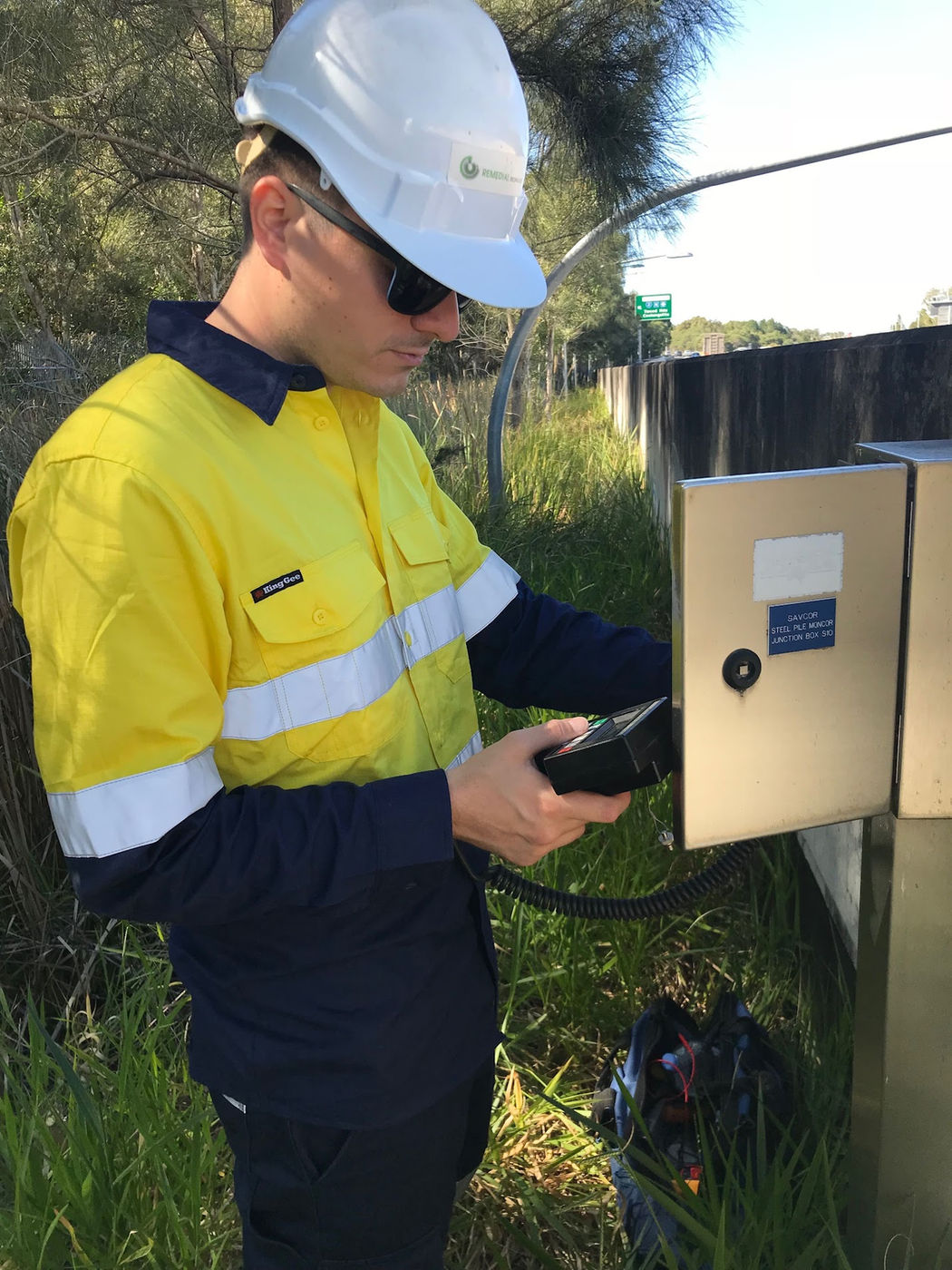
What our CP testing includes
Every testing program covers:
- Accurate instant OFF potential measurements
- Depolarisation (decay) testing against protection criteria
- Functional checks of power supplies, reference electrodes, junction boxes and cabling
- Any adjustment of output settings for each zone
- A clear report with results, faults and recommended actions
Testing in line with AS 2832.5
AS 2832.5 sets out guidance for monitoring and testing cathodic protection systems on steel in concrete structures. We set a program for each system that combines continuous remote monitoring through CPMS with periodic on-site testing and a yearly inspection, so asset owners can show their systems are performing.
Testing is part of our full cathodic protection monitoring and maintenance service.
Common questions
How often should a cathodic protection system be tested?
It depends on the system, the structure and its exposure. Most programs combine continuous remote monitoring with periodic site testing and a full yearly inspection and report.
What is a depolarisation test?
The system is switched off and the steel potential is measured over a set period. How far the potential decays shows whether the steel is receiving enough protection current.
What happens if a CP system is not maintained?
Faults such as failed power supplies, damaged cabling or drifting reference electrodes can leave parts of a structure unprotected without anyone noticing, and corrosion can restart.
Can you test systems installed by other contractors?
Yes. We start with an audit of each system and then bring it into a testing and maintenance program, whoever installed it.
Can testing be done remotely?
Much of it can. Systems connected to CPMS report their performance continuously, and systems with MicroNex units can be adjusted remotely, so site visits are planned around live data.